
Cy Hutchinson’s Journey From Vessels to Monuments
Cy Hutchinson, a Barbadian wood sculptor, amazed and re-defined the public’s understanding of his work with the recent exhibit, “A Collection of Pointless Objects,” held at the Queen’s Park Gallery in Bridgetown. Living Barbados spoke with him about the inspiration and evolution of his work.
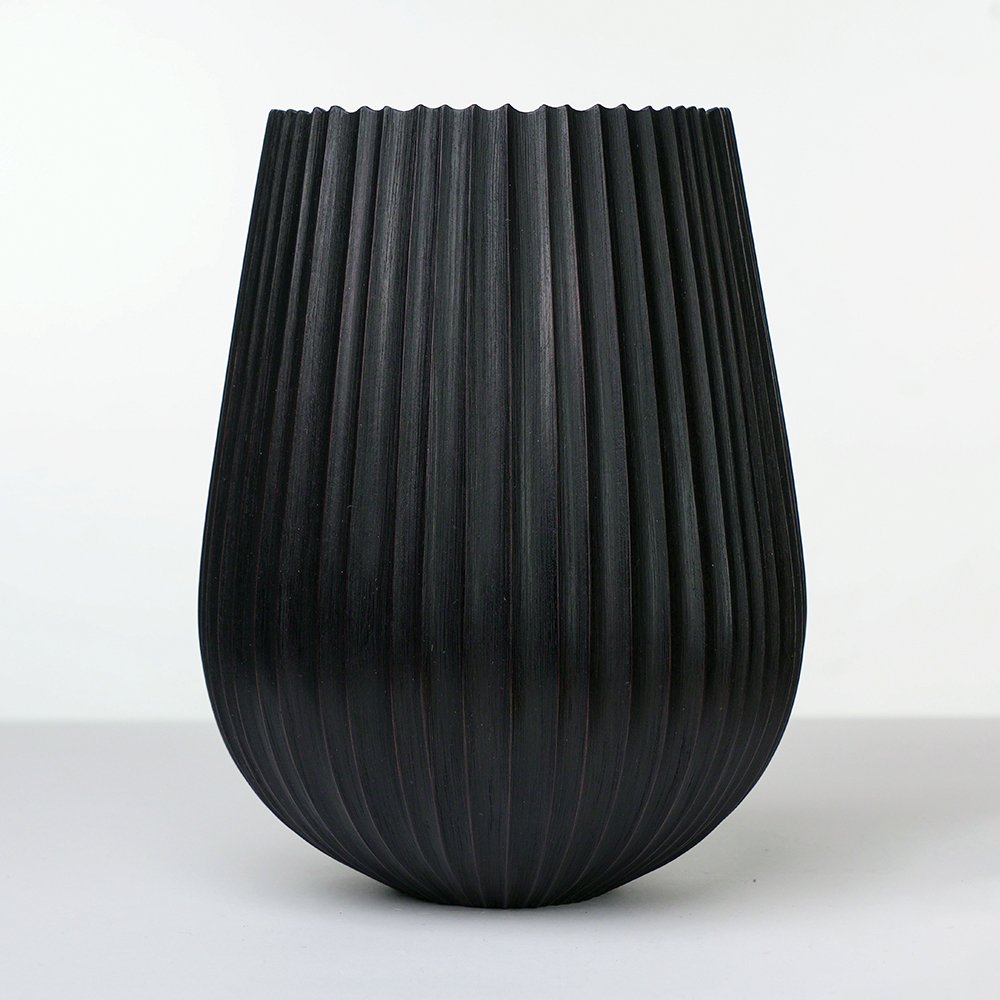
Cy’s work is not mass-produced; he is known for exquisite, lovingly crafted sculptures and bespoke furniture. He sometimes incorporates metal, rope and other manufactured materials into the work. He says there is often inspiration from organic forms such as the shapes of seeds, marine creatures, birds’ wings and plants. Recently, he has also started the “Protection” series, which consists of large sculptures that look like prehistoric tools and weapons made by early humans. These pieces incorporate the shape of shields that humans created to protect themselves and the various elements that plants and insects have as protection.
Ceramicist Juliana Inniss is a fellow artist and a friend of Hutchinson’s. She says he is deeply dedicated in making art. Of his new work, she says, “with intricate textures, satin-smooth surfaces, and landscape inspired finishes… patinated, scorched and ebonized, they left me speechless. I would describe his work as magical, exquisite and inspiring.”
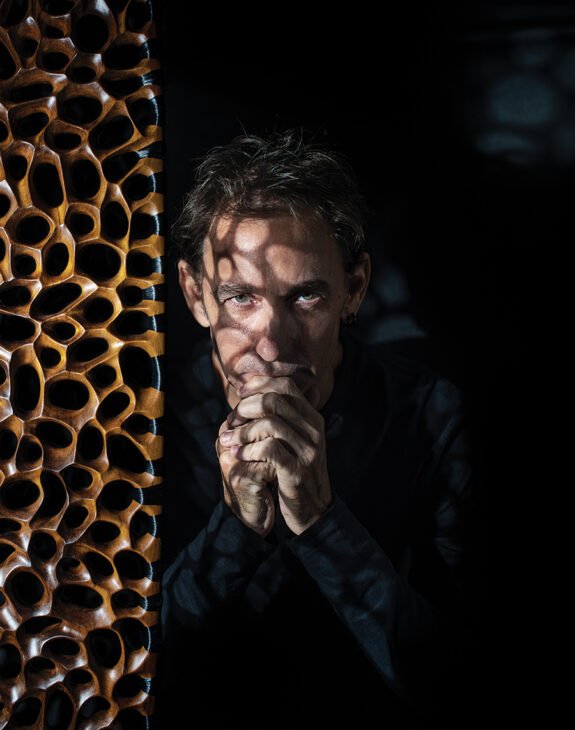
Cy’s artistic journey began with studies in woodwork and metalwork at Harrison College and the Barbados Community College (BCC). At BCC, he met his future wife and creative partner, Lisa, who specializes in graphic design and event production. In their day-to-day, Cy works with Lisa in producing events, and Lisa provides valuable feedback on his woodwork. As often happens between collaborative spouses, this is helpful to them both. “A lot of times I’m working on more than one piece, and I may get lost, and she helps me see a way through… she lets me go down a different path, and it helps me eventually get to where I need to go to realize the work.” In turn, Lisa tells LB that Cy gives her feedback on how to approach her work. Lisa helped him mount the pieces for the show along with the QPG gallery team, led by QPG curator Oneka Small.
Hutchinson attended Rycotewood College In Thame, Oxfordshire, England, in the late 1990s, where he studied “Furniture Design and Making,” He returned to Barbados to make art and functional furniture simultaneously. His breakthrough came in 2011 at the National Independence Festival of Creative Arts (NIFCA), where he won a gold award for the sea-urchin-inspired piece “Cobbler.” He would go on to win that prize at NIFCA again in 2013 and 2014. Additionally, he won the Governor’s Award at the Crop Over Visual Arts exhibition in 2012 and again in 2019. These early accolades solidified his reputation and attracted a dedicated clientele, including art collectors like Dr Adrian Richards and Barbados National Art Gallery board member Dr Clyde Cave. Dr. Richards purchased the aforementioned “Cobbler” and other pieces. “Cy’s artistic visions in reclaimed Barbadian woods are captivating and stunningly beautiful,” says Richards, “I am often in awe of his skill and thought process.”
Dr. Cave said, “I commissioned Cy’s first piece of furniture over 20 years ago and have acquired several bowls. I still enjoy the lines, textures and streamlined aesthetic. Though his work may initially appear sparse and simple, this disguises the deep emotional and sensual relationship that evolves and never feels old.” The support of these clients has kept Cy going when he thought his work would not be accepted. “Sometimes people have told me to leave Barbados so my work would get more support, but my roots are here, and here is where I want to be.”
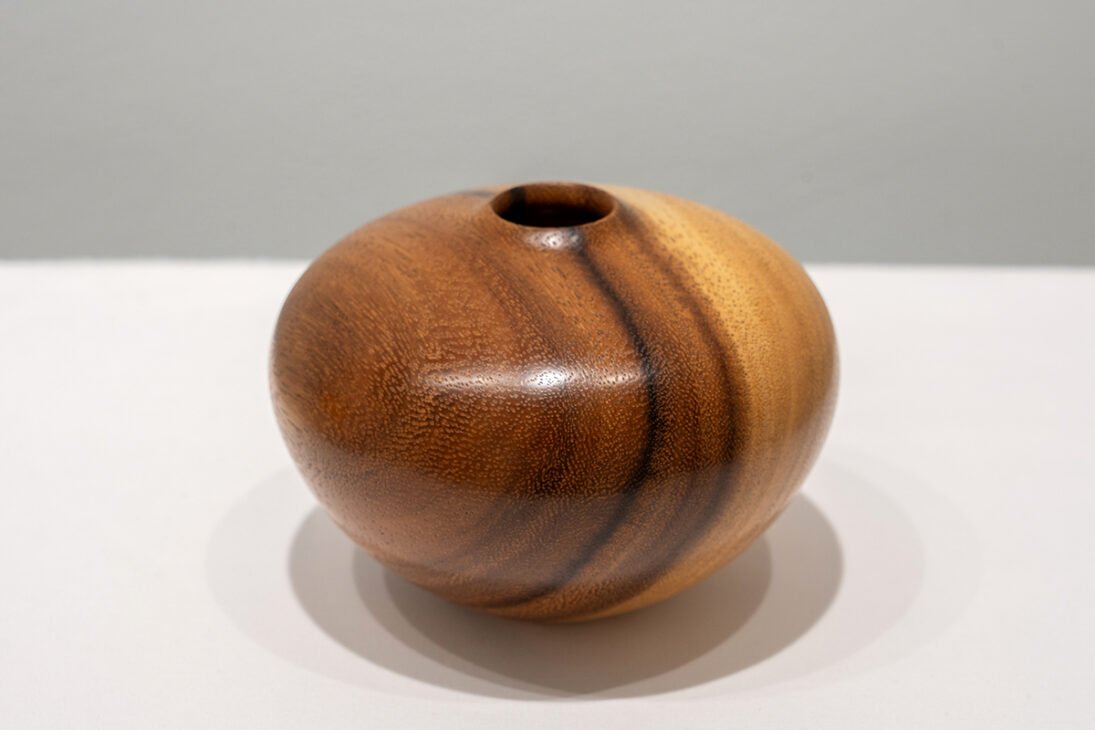
Walking around the show, Cy tells LB, “One of the reasons I mounted the recent work on canvas “[is because] it lifts them off the wall and makes them understood straight away; people respect them when they are on a plinth. So I’m hoping that that will help people understand that these are objects not to be done anything with, but you revere them, look at them as if they were a painting.”
The work in “A Collection of Pointless Objects” was also a big step to let Hutchinson “see how work like this would be received.” No fear there; the new work has been well received; the large pieces would look great in someone’s home as much as in a high-end hotel; they invite contemplation and multiple looks. Judging by the positive response, Cy’s work will hopefully continue to captivate viewers with its scale, technical prowess, and beauty.