
Sculptures Of The Ocean
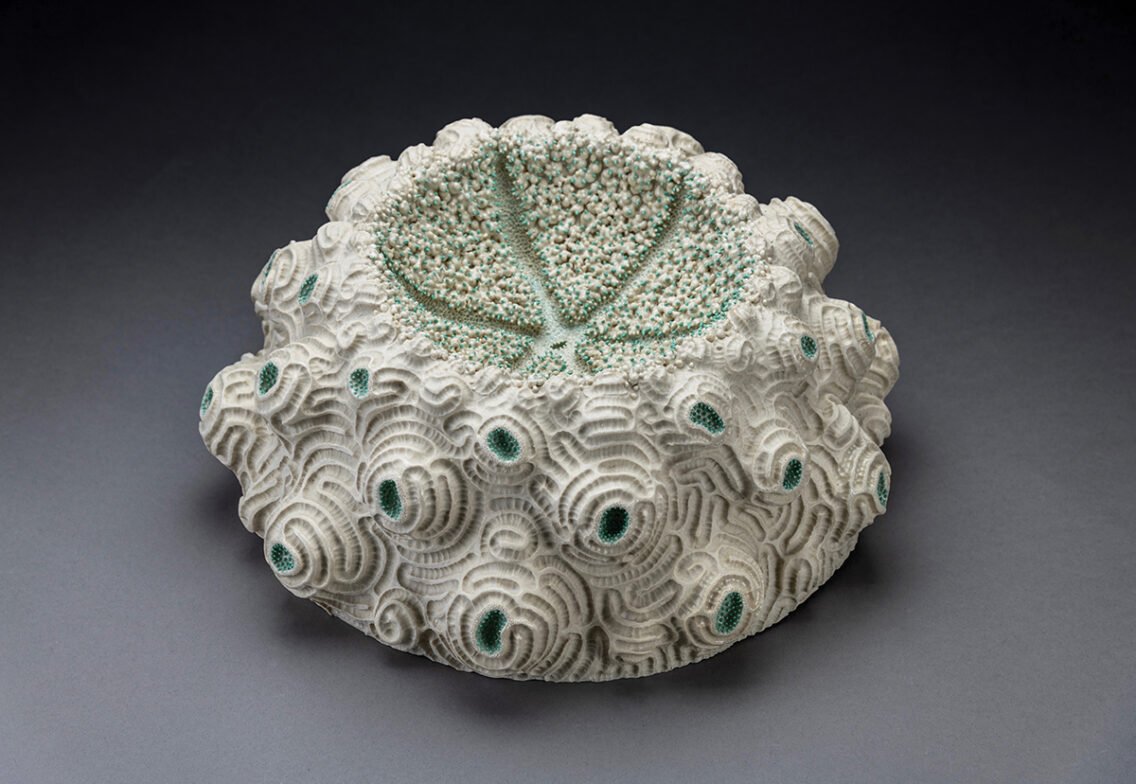
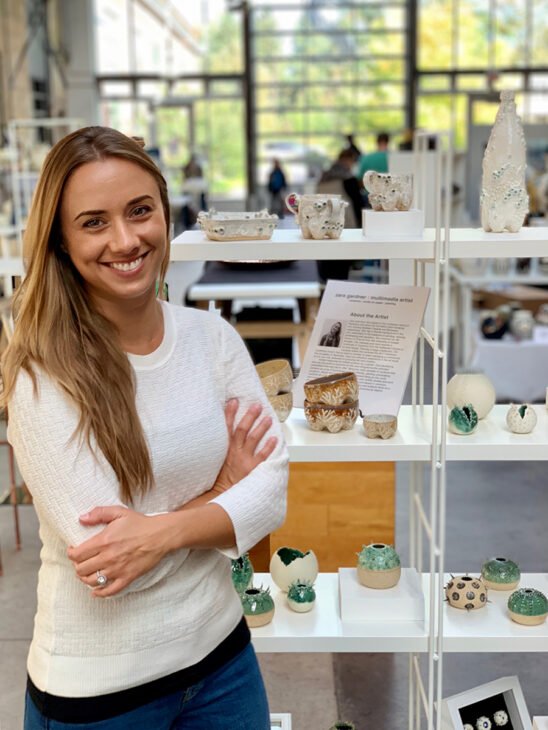
A few months ago I came across some unique ceramic pieces online. What initially caught my attention was the spectacular detail and realism of each work. Some were so intricate they evoked a sense that to truly appreciate the work they would need to be touched. After some investigation I was excited to discover that the artist was Bajan. I reached out and we had a virtual coffee to talk about art, life and Barbados.
Zara Gardner was born and raised in Barbados and spent her formative years studying and working between Canada and Barbados. She has a diverse background in the arts, particularly in the mediums of painting, drawing, printmaking and ceramics. Zara received a Bachelor of Arts (Hons) in Fine Art from the University of Guelph in 2010 and a Certificate in Ceramics from the Haliburton School of Art and Design, Fleming College in 2017.
After her studies Zara returned to Barbados and managed an art gallery while creating her own art part-time. Finding it hard to balance the two, she finally decided to move back to Canada in 2016 to further her education and focus on her creative pursuits. Her dedication paid off. In 2017 she received the Ceramics Certificate Award from the Haliburton School of Art and Design followed by the Craft Ontario Affiliate Award at the Fusion Clay & Glass Inaugural ‘Breakthrough’ Exhibition held at the Robert Langen Art Gallery, University of Waterloo.
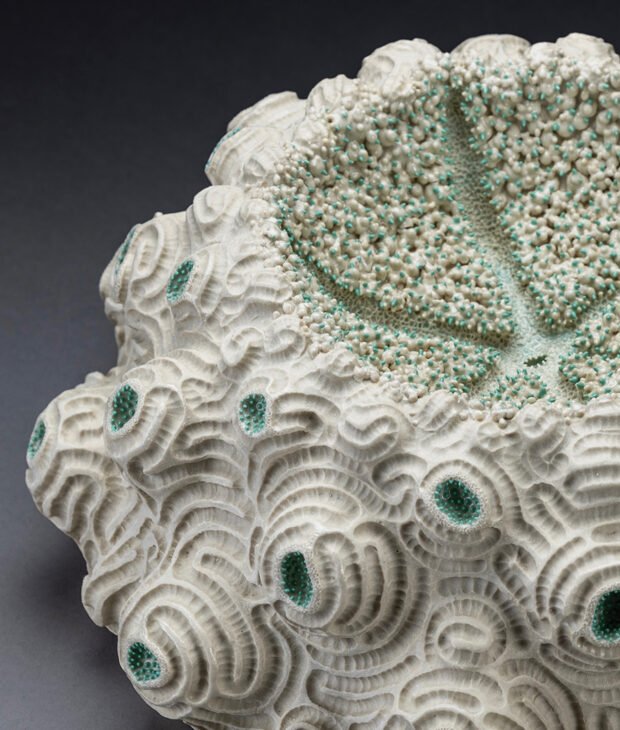
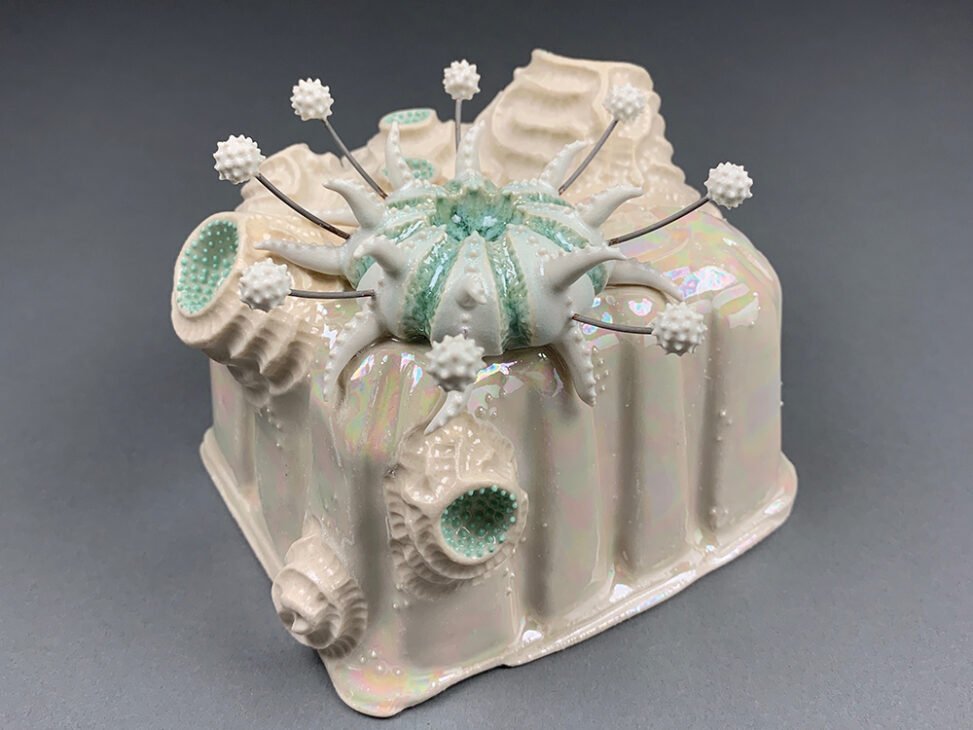
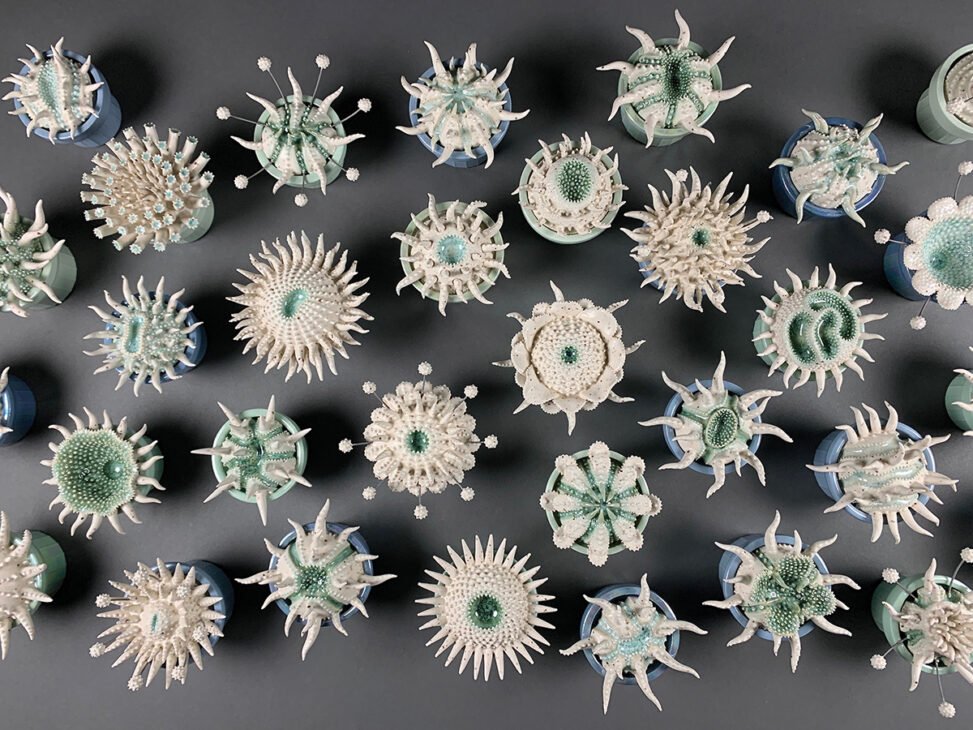
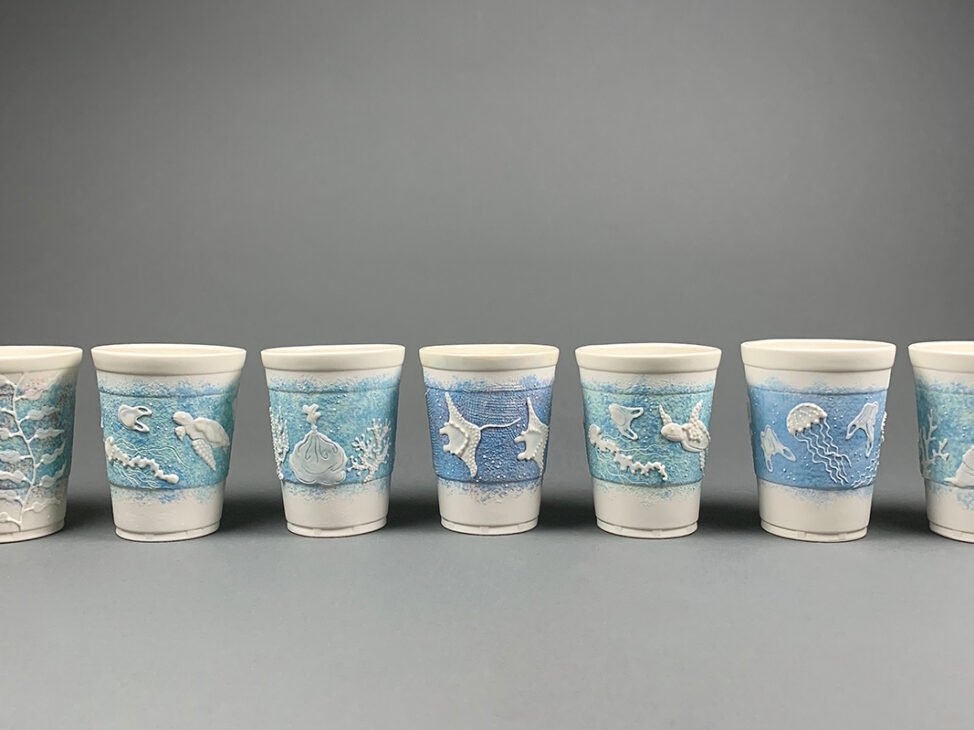
Of all the mediums she could have chosen I wondered, why ceramics? “I was intrigued by the unlimited possibilities that the medium of clay had to offer. It is such a versatile medium in which you can combine an array of techniques such as drawing, painting, printmaking, sculpture, design and installation,” she says. This new found love for ceramics proved very exciting as it allowed her to translate past subjects done on a two-dimensional surface into the realm of three-dimensional objects.
There is a definite theme that carries through most of her work – the sea. She smiles and confirms, “All of my work in some way focuses on the many wonderments and curiosities of the ocean, particularly the bustling cities of coral reefs and their diverse inhabitants.” Her work explores the intricate and fragile beauty of coral reef ecosystems. Through her art she addresses the influences and impacts of humankind on marine environments with a specific focus on plastic pollution and coral bleaching.
Being an island girl, it is easy to understand her admiration for the ocean. But it is more than that. She has a profound connection that focuses not only on the beauty but the dangers to the ecosystems she grew up seeing. From an early age she enjoyed beach combing, snorkelling, exploring shallow tide pools and observing creatures that lurked under the rocks. “Collecting specimens of sea life became a source of fascination for me and sparked a curiosity that has infused into my artistic practice across many mediums,” she explains.
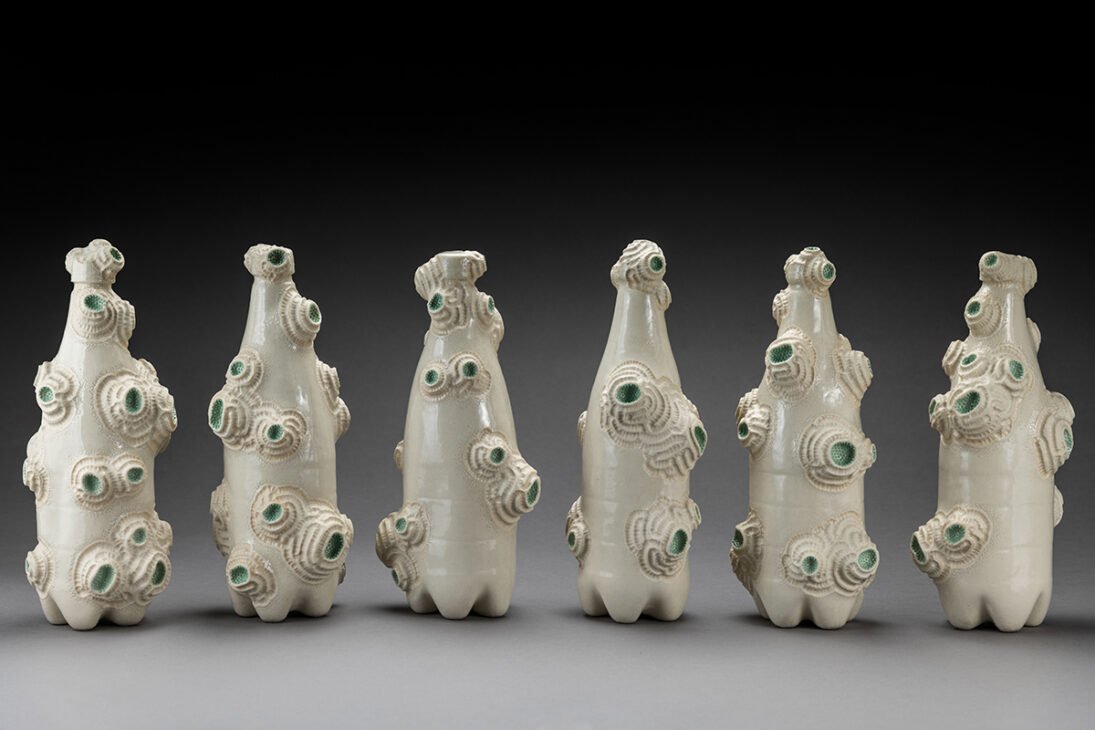
Zara creates intricate objects in clay that range from functional to sculptural. Her collections spark concern, curiosity and an appreciation of our natural world and the hardships facing it.
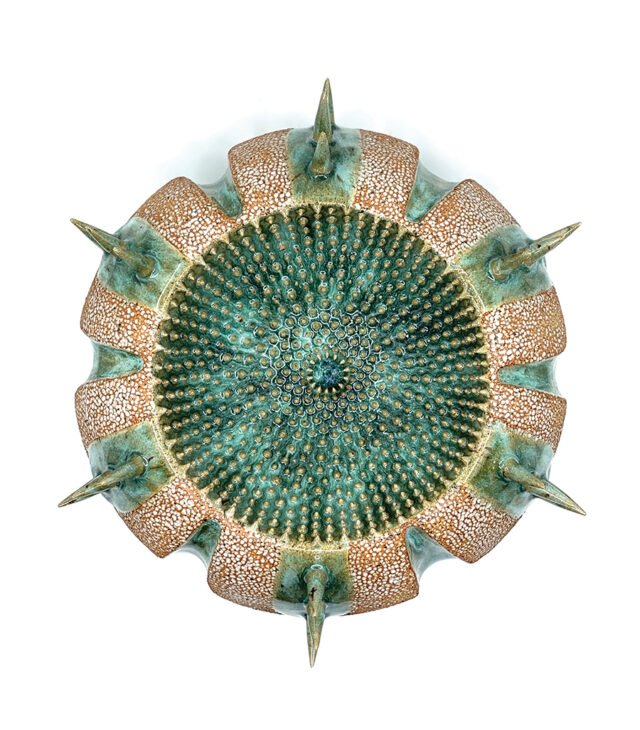
Her sculptural works bear an abstracted reference to an array of marine organisms examined from personal collections, marine photography and scientific illustrations (corals, sea urchins, anemones, to name a few). There is great attention paid to detail, shape, pattern and texture to expose the complexities and fragility of these creatures that often go unnoticed.
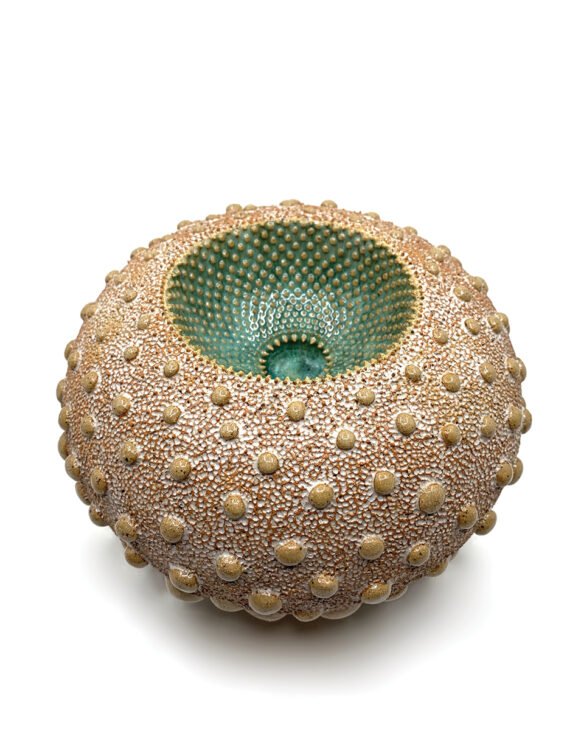
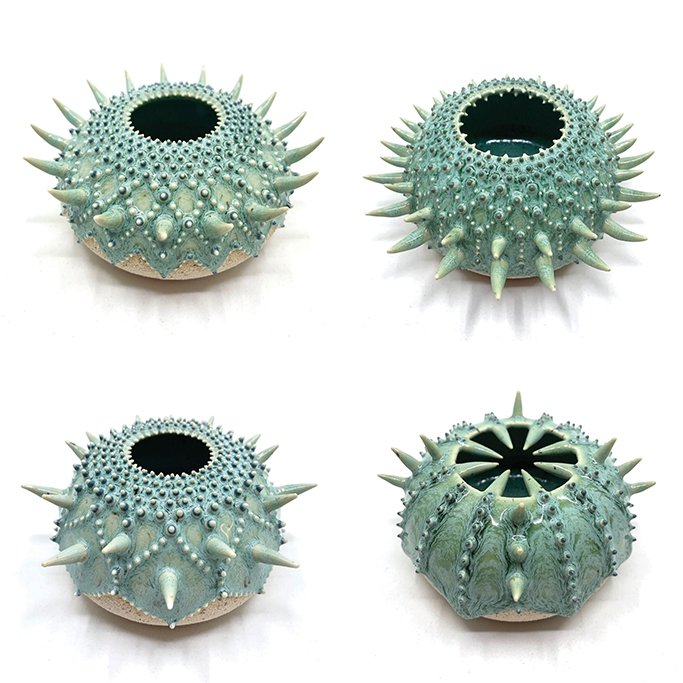
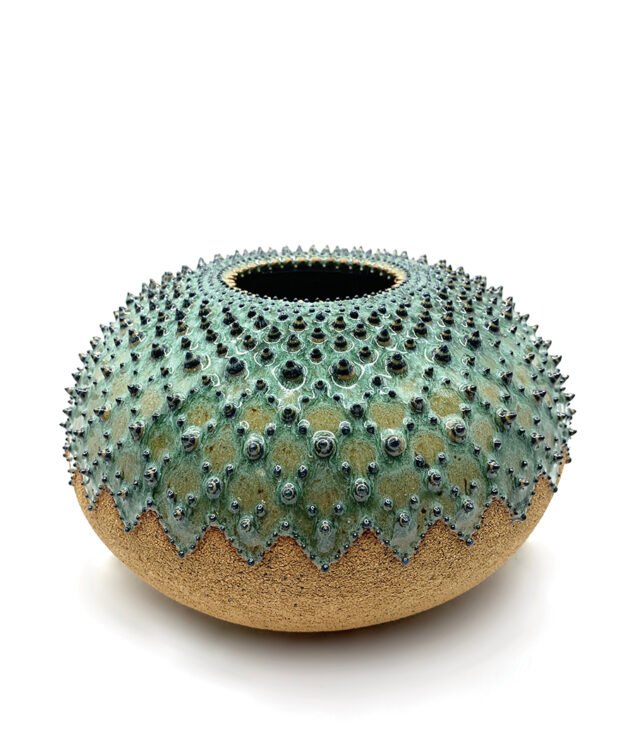
Explaining her process she says, “I use a variety of methods to create my work – from hand building and slip casting to wheel throwing. I collect various items to use as molds or to make molds from, particularly disposable plastic objects such as bottles, containers, and cups.” Once a base form is established, she then begins sculpting and adding the details. This portion of the process can be long and tedious in some cases and requires a level of patience that almost takes her into a state of trance. Her process also allows for much experimentation with different textures and patterns to expose the complexities of her subject matter. An array of tools is also used to achieve textures and details including the slip trailer – the fine tip allows her to create precise little dots. “I enjoy the intimacy of each dot; the delicate precision becomes somewhat meditative,” she says with a smile. This process is seen in full display in her series of ‘Urchin Vessels’ where multiple layers of slip dots in varying colours are built up slowly into little spikes to reveal intricate patterns that spiral around the form, all mapped out by eye.
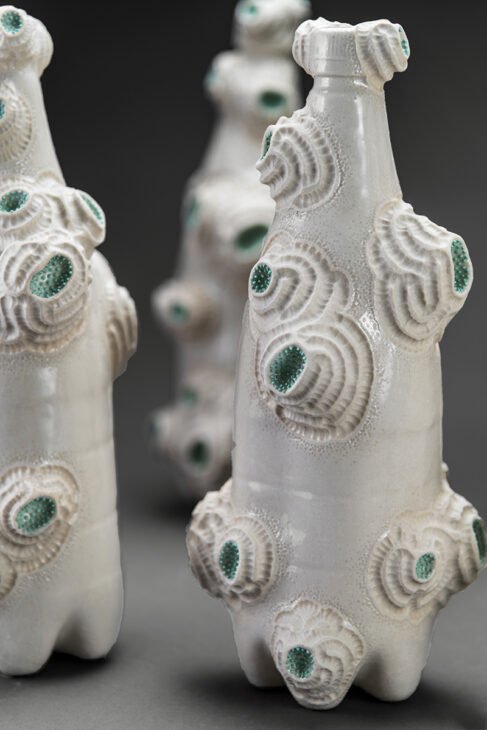
The hybrid sculptures she creates investigate the interactions of marine organisms with the never-ending flood of invasive debris that accumulates in their environment every day. This forced adaptation and co-existence has inspired a body of work that were part of her first featured exhibition at the illustrious Gardiner Museum in Toronto, Canada earlier this year. Pieces in this ‘Reproduction’ series prompt the viewer to contemplate how the natural world is attempting to reclaim, repurpose, rebuild and reproduce in the face of destruction. Using her collection of found plastic objects such as bottles, laundry detergent lids and packaging containers as a base form, intricate hand-built coral structures and/or organisms are meticulously affixed, appearing to grow, live on, around and within these fleetingly used plastic objects. These pieces are primarily varying tones of white with delicate hints of colour to touch on the fact that these coral structures and/or organisms have been prone to coral bleaching and are in fact unhealthy or dead.
Zara’s functional series of work entitled ‘Plasticware’ strives to visually communicate, stimulate and provoke the conscience of consumers of single-use plastic disposables by using found plastic objects as molds for hand building and slip-casting. The end result is a collection of tableware such as cups, bowls, planters and trays. Some of the plastic objects used are collected from beaches in Barbados, revealing a variety of scars from its life at sea in the final piece. In having these recognizable single-use plastic objects reproduced into a more functional ceramic form, her aim is to give it permanence in our everyday lives as opposed to a brief encounter at the time of use. It should remind users that these plastic objects are forever permanent and constantly accumulating at an alarming rate in the environment.
When experiencing Zara’s work there is a palpable awareness of her artistic activism. Her passion is displayed through the shapes and intricate details she creates. She admits, “The aim of my work is to make the invisible visible; to have a meaningful impact on the viewer by challenging their understandings and perceptions of the ocean and the perils facing it.” Her passion to bring awareness to ocean is noble and provocative. I have never seen a political statement this beautiful and I hope viewers are moved to appreciate the fragility of her subjects and the crucial role they will play in our ecosystem for generations to come.